

When systems change, NHS-quality care must remain steady

Reliable specialty clinical care in patient’s homes that can quickly flex to support NHS capacity
Sciensus provides clinical care, including complex medicines administration and patient training, enabling patients to receive high-quality treatment at home while supporting clinical teams when hospital capacity is under pressure. Where appropriate, this approach also supports patients to manage their treatment independently through safe self-administration, helping them maintain their day-to-day lives alongside ongoing care.
For the NHS, reliability is a partnership requirement, especially when a patient is identified as appropriate for transition to clinical care at home. NHS teams need to know every operational touchpoint has been designed to ensure timely, safe and efficient care that also maintains clinical visibility. When reliability faulters even in a small detail, the knock-on effects are felt immediately by patients, pharmacy teams and clinicians, creating increased pressure across an already stretched NHS system.
That is why the Sciensus end-to-end, integrated services are co-designed with NHS teams to ensure consistency and reliability. From onboarding and prescribing through to dispense, delivery, complex drug administration and medicines management, every part of our model is digitally enabled, clinically led and developed with NHS teams, so reliability is built into services.
Co-designed with the NHS to support everyday clinical practice
Sciensus has worked in collaboration with NHS clinicians, pharmacists, Health Boards and Trust teams to ensure services align with established clinical workflows and operational processes.
This approach allows care models to be adapted to local needs while maintaining the consistency required to operate safely at scale. Digital tools simplify processes, redcuce risk and support timely access to treatment, always underpinned by clinical judgement and human oversight.
The result is a service that supports efficient referrals, timely onboarding, secure prescription handling and safe delivery of complex clinical care in the home. NHS teams retain clear oversight of treatment delivered outside hospital settings, supporting informed clinical decision-making at an individual patient level.
“Our services are available whenever and wherever they are needed. We’ve shaped them alongside NHS teams so they can flex with changing clinical pressures and operate as an extension of NHS services, providing hospital-quality care in the home,” explains Andrea Roberts, Director of NHS Services & Operational Interface at Sciensus.
Timely onboarding
Timely onboarding is critical to efficient patient care. Delays can disrupt treatment, result in hospital admissions and place additional strain on clinical teams.
Sciensus has developed onboarding pathways with NHS partners to support the safe and efficient transition of patients into specialist clinical care at home, including during periods of increased demand. Once a completed patient registration is received, patients are typically set up on the Sciensus system within an average of 30 minutes. From receipt of patient registration to the physical delivery of medicines, the process takes an average of 7.77 days. For patients requiring clinical in-home administration and training, the average time from receipt of registration to a nurse visit to administer treatment is 9.7 days.
Where digital onboarding is used, timelines are reduced further, taking approximately half the average onboarding time, enabling earlier treatment initiation and minimising workloads for NHS teams. These pathways align with clinical handovers, pharmacy processes and NHS governance requirements, supporting safe and predictable transitions.

Innovative digital solutions
Sciensus operates robust registration and delivery pathways designed to support uninterrupted treatment. Operational data shows our digital solutions have resulted in a three-day average reduction in prescription renewal turnaround, helping patients continue treatment as planned.
Secure digital prescription upload via our Sciensus Connect Portal has achieved a 96% reduction in duplicate prescriptions, alongside a 44% reduction in emergency prescriptions and a 17% reduction in late prescriptions. In addition, missed dose events have reduced by 15% overall, rising to 60% where blood prompts and clinical reminders are used.
These pathways are designed to save time and reduce duplication, supporting more efficient use of NHS and clinical resources. For example, through use of digital prompts to encourage timely blood tests, clinical teams can focus on care rather than administrative chasing with letters and phone calls. This helps ensure the information needed for clinical decision-making is available on time, reducing the risk of delayed prescription renewals and interruptions to treatment.
Extension of NHS capacity
Capacity constraints remain a persistent challenge for the NHS, particularly during winter months. Where clinically appropriate, delivering treatment at home enables NHS teams to free capacity, reduce pressure on clinics and IV suites, and lower secondary infection risk.
Sciensus’ specialist nursing teams support patients to receive complex treatment at home, backed by clear escalation pathways. This allows Sciensus to flex quickly as an extension of the NHS during periods of peak demand, supporting patient flow and helping services manage waiting lists more effectively.
Clear and responsive communication
Reliable access to support underpins safe and efficient care delivery. Informed by feedback from NHS teams, Sciensus operates multiple contact channels, including telephone, live chat and specialist query teams, to ensure patients and clinicians can access timely assistance, with clear escalation pathways in place to minimise disruption to clinical services.
In 2025, 387,000 calls were answered, including 21,000 priority calls managed through escalation pathways. Priority calls are answered in under 25 seconds on average, with an overall average wait time of less than 2.5 minutes, even at scale.
98.84% of queries are resolved on the first call, and patients rate their experience with call agents at 4.67 out of 5. For NHS teams, this level of responsiveness reduces follow-up, escalation and ongoing intervention.
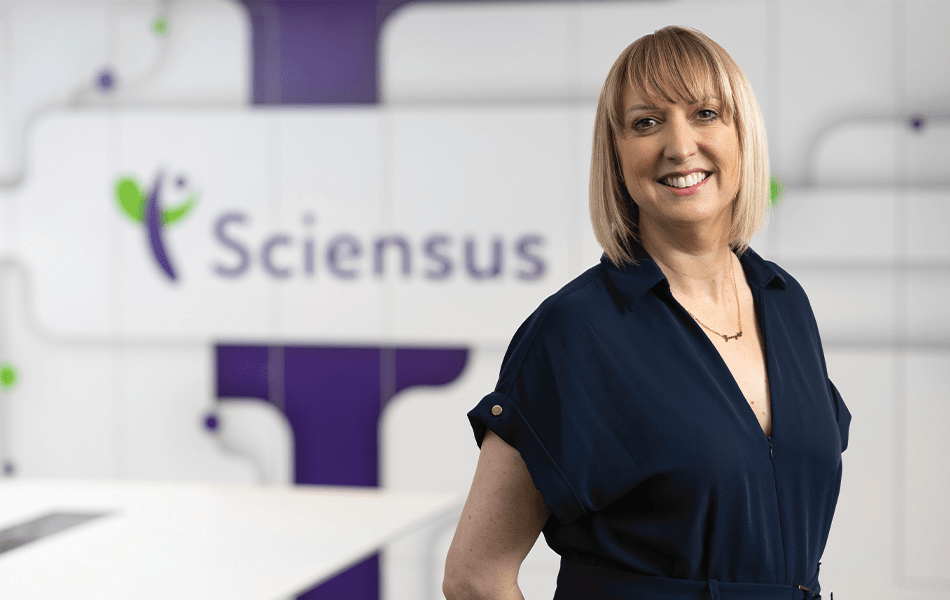
Delivering care in the home enables patients to manage chronic conditions in a way that fits with everyday life and the reassurance that clinical support is available when it is needed.
Victoria Deadman NHS Services Director at Sciensus
Supporting NHS services when it matters most
By combining clinical expertise with digital capability and working closely with NHS partners, Sciensus provides specialist clinical care in patient’s own homes that supports timely treatment, effective medicines management and additional NHS capacity when it is most needed.
“Delivering care in the home enables patients to manage chronic conditions in a way that fits with everyday life and the reassurance that clinical support is available when it is needed,” says Victoria Deadman, NHS Services Director at Sciensus. “We take our responsibility to patients and the NHS seriously. Our role is to work alongside NHS teams as a trusted and dependable partner, providing NHS-quality clinical care in the home while helping services operate more effectively and ensuring clinical attention is focused where it is needed most.”
Let’s talk about supporting your capacity requirements
Speak to our team about how our clinical homecare services can flex with demand and free up NHS capacity.