
How ambient AI is transforming homecare documentation
At Sciensus, we’ve always believed that the best healthcare happens when nurses can focus on what matters most: being present with patients. That’s why we’re excited to share findings from our CareTranscribe pilot – the first feasibility study to evaluate AI-enabled ambient speech capture in home-based delivery of complex therapies, which we presented at ISPOR 2026 in the United States.
What we learned
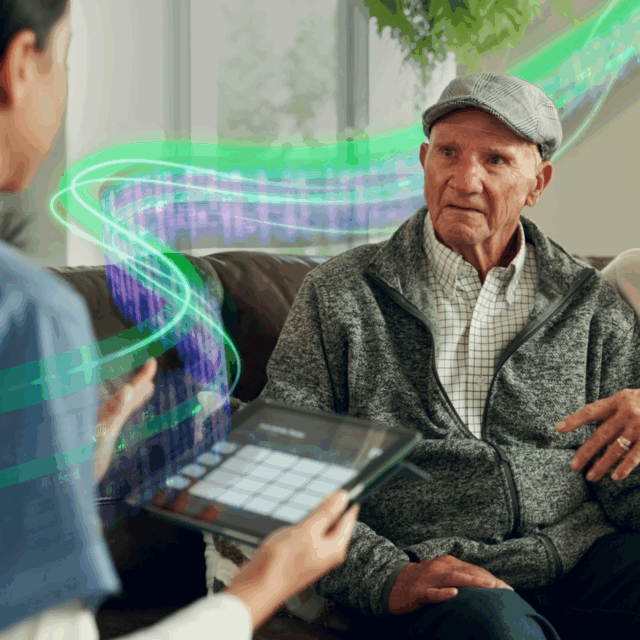
Over 16 weeks, 10 nurses conducted 100 home visits across England and Scotland with patients receiving biologic treatment for inflammatory bowel disease. The results demonstrated that ambient AI can integrate seamlessly into routine homecare while maintaining high standards of patient care and documentation quality.
The numbers tell a compelling story:
- 95% patient consent rate
- Nurse usability scoring 8.5 out of 10
- Approximately 90% transcription accuracy
But beyond the metrics, we learned something even more valuable – this technology has the potential to surface insights that traditional data collection methods often miss.
Supporting nurses, elevating care
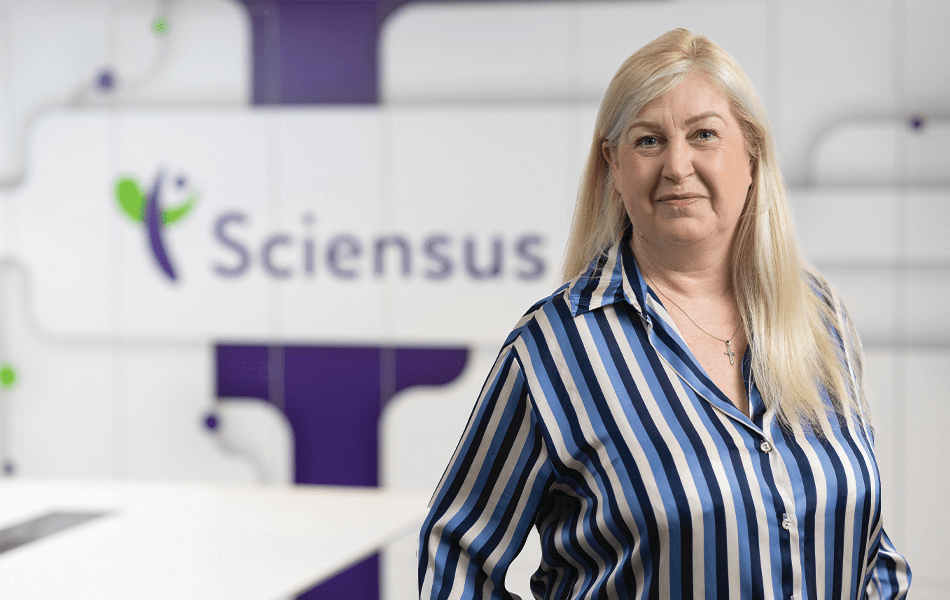
“Homecare nurses work in some of the most complex environments in healthcare, often juggling long visits, multiple paper processes and the realities of people’s daily lives,” said Alison Griffiths, RGN/MSc, Director of Nursing and Clinical Operations at Sciensus. “Our pilot shows that, when implemented safely and transparently, ambient AI can support nurses to stay present with patients while still generating high-quality documentation.”
The pilot identified four key areas where home-based ambient capture could generate valuable real-world insights:
- Adherence barriers
- Safety signals
- Device and self-administration challenges
- Daily-life factors affecting treatment
Uncovering real-world insights
What makes this approach particularly powerful is its ability to capture the nuances of how therapies work in real-world settings – not just clinical environments.
“Home-based ambient capture might be able to show what has been invisible to traditional data sources,” explained Noolie Gregory, BSc, Head of Evidence Generation at Sciensus. “By embedding this kind of capability into high-quality homecare services, we can better support nurses, understand how complex therapies are really used and ultimately design services that work for patients and health systems alike.”
What’s next
Building on these promising results, Phase 2 will focus on deeper analysis of real-world insights signals, expansion into additional disease areas and workflow automation to reduce parallel documentation burden. We’re committed to developing solutions that don’t just add technology for technology’s sake but genuinely improve the experience for both patients and healthcare professionals.
This work represents another step forward in our mission to connect patients to life-changing therapies faster through integrated solutions that combine human care and advanced digital tools.