
Beyond access: Why cancer success depends on adherence, persistence and patient insight
Cancer medicines are evolving rapidly. Across cancer, more treatments are moving into targeted, oral and longer-term pathways, giving patients new options and greater flexibility in how their care is delivered.
But this shift also changes what success looks like.
For many cancer therapies, securing access is no longer the only challenge. What happens after prescribing is becoming just as important: whether patients feel confident starting treatment, understand how to manage side effects, remain engaged between clinical appointments and continue therapy safely over time.
This is especially relevant for oral systemic anticancer therapies, targeted treatments and complex regimens where patients may take on more responsibility outside the traditional hospital setting. In these pathways, adherence and persistence are not simply operational considerations. They can directly influence patient experience, real-world uptake and the overall value story of a medicine..
The changing challenge for Pharma Cancer teams
Cancer teams are operating in an increasingly complex environment.
Many new cancer medicines are designed for more specific patient populations, longer treatment durations or more personalised pathways. At the same time, healthcare systems are under pressure, clinical capacity remains stretched and patients are often expected to manage more aspects of treatment at home.
This creates a gap between access and outcomes.
A patient may receive a prescription, but still face practical, emotional or behavioural barriers that affect how they start and remain on treatment. These could include uncertainty about side effects, low confidence managing symptoms, confusion around dosing, lack of timely support, digital exclusion, or anxiety about when to escalate concerns.
For manufacturers, this means treatments need to look beyond the point of prescription. It needs to consider the patient journey in real life.
Why adherence needs to be designed into therapy success
Adherence in cancer is rarely just about remembering to take medicine.
It is influenced by how patients feel, what they understand, the support available to them and how quickly concerns are recognised. In cancer care, where side effects can be complex and treatment can feel overwhelming, patients may need more than written information or a general helpline.
They may need proactive, specialist support that helps them feel confident, safe and connected throughout treatment.
This is where cancer-trained, nurse-led and digitally enabled support can play an important role. By combining human clinical contact with digital reminders, virtual check-ins, patient-reported outcomes and escalation pathways, support can be designed around patient behaviour rather than simply around service delivery.
For pharma teams, this creates an opportunity to strengthen three critical areas:
Patient confidence at the start of treatment
Patients need to understand what to expect, how to take their medicine and when to ask for help.
Persistence over time
Longer treatment pathways require ongoing engagement, reassurance and practical support to reduce avoidable drop-off.
Insight generation
Aggregated, consent-led patient insight can help teams understand barriers, experience and support needs in real time.
The importance of specialist cancer nursing
In cancer, support needs to be credible, clinically informed and responsive.
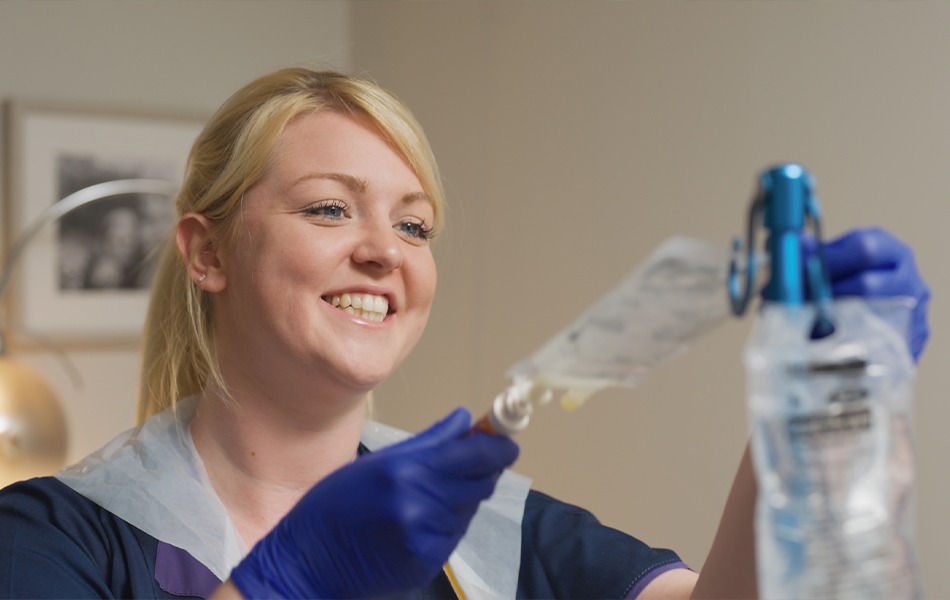
Specialist cancer nurses can help patients navigate treatment beyond the clinic, supporting education, symptom recognition, escalation and reassurance. This can be particularly valuable for patients receiving treatment at home or managing therapy between hospital appointments.
For pharma teams, specialist cancer nursing can also help create a more consistent support pathway. Rather than leaving patients to manage uncertainty alone, nurse-led contact can provide structured touchpoints that help identify issues earlier and support safer treatment continuation.
This is especially important for therapies where side-effect management, patient confidence and persistence are commercially and clinically relevant.
Digital support should enhance, not replace, human care
Digital tools can play a valuable role in cancer adherence, but only when they are designed around real patient needs.
Reminders, app-based content, virtual check-ins and patient-reported outcome tools can help patients stay engaged and provide useful insight into how they are managing treatment. However, digital support is strongest when it is connected to clinical expertise and clear escalation routes.
The goal should not be to replace specialist human contact. It should be to create a more responsive, scalable and personalised support model.
A digitally enabled model can help identify when patients may need additional support, while specialist teams can provide the reassurance and clinical judgement needed to act on those signals.

From patient support to patient insight
One of the most valuable opportunities in cancer adherence support is the ability to understand what is happening beyond the clinic.
Patients’ real-world experiences can highlight practical barriers, symptom concerns, engagement patterns and unmet support needs. When collected appropriately and compliantly, this insight can help inform programme optimisation, evidence generation and future service design.
For pharma teams, this can be particularly important in competitive or complex treatment areas where differentiation depends not only on the medicine itself, but also on the quality of support around it.
A structured adherence support model can therefore serve two purposes: helping patients stay supported in real life, while giving manufacturers a clearer view of how the pathway is working.
Which cancer assets may benefit most?
Not every cancer medicine will require the same level of adherence support.
The strongest fit is often seen where patients carry more responsibility for managing treatment, where side effects require proactive recognition, or where persistence over time is especially important.
This may include:
- Oral or self-managed SACT
- Targeted therapies
- Complex treatment regimens
- Longer-duration treatment pathway
- Medicines with a competitive launch context
- Assets where real-world insight or evidence generation is important
For these therapies, adherence support should not be treated as an add-on. It should be considered as part of brand excellence.
Building support around real patient behaviour
As cancer care continues to evolve, medicine planning needs to reflect the reality of how patients live with and manage treatment.
Access remains essential, but it is only the beginning. To support successful uptake and persistence, pharma teams need to think about the full patient journey: the first dose, the first side effect, the first moment of uncertainty and the ongoing confidence needed to continue.
That requires a model that brings together specialist nursing, behavioural adherence support, digital tools, escalation pathways and meaningful patient insight.
For pharma cancer teams, the opportunity is clear: design support around real patient behaviour from the start.
By doing so, manufacturers can help patients feel more confident, support safer treatment continuation and generate the insight needed to optimise programmes over time.
How Sciensus can support cancer teams
Sciensus supports cancer patients across a wide range of systemic anticancer therapy pathways, combining specialist cancer nursing with digital tools, patient engagement and insight generation.
Our cancer adherence support model is designed to help patients start well, stay on treatment and feel supported throughout their pathway, while giving manufacturers a clearer view of patient experience and programme performance.
For pharma teams considering utilisation of their molecule, this creates an opportunity to build adherence, persistence and patient insight into molecule planning from the beginning.
To explore where nurse-led and digitally enabled support could strengthen your cancer strategy, speak to Sciensus about our cancer adherence support model.

