
From isolation to integration: what we learned on Rare Disease Day 2026
On 27 February, we brought together patients, clinicians, industry leaders and advocates to mark Rare Disease Day 2026. The conversation went beyond treatments, focusing on patients, families and the systems that support them and where challenges still exist and the improvements that are still needed.
As Julie Gosper, Managing Director, Rare & Specialty at Sciensus, opened the session, she reminded us that Rare Disease Day is more than an awareness campaign:
“It is about connection between patients, clinicians, innovators and advocates all working together towards making life with a rare disease easier, more supported and better understood.”
That theme of connection ran through every conversation that followed.

Rare by definition, not by impact
Rare diseases are defined by numbers. In the EU, they affect no more than 5 in 10,000 people. In the US, it’s fewer than 200,000 individuals. But as Dr Ray Huml, Vice President, Rare Disease Strategy at Sciensus, explained, these definitions only capture the scale of the issue – not the human reality behind it.
Behind those thresholds are very real human experiences. Ray shared his own family’s journey following his children’s diagnosis with FSHD, reflecting:
“Rare diseases don’t affect just one person. They ripple outward like a pebble dropped into water, touching families, caregivers, communities and the entire healthcare ecosystem.”
The burden is not just clinical. It is emotional, financial and deeply personal.
The hidden weight of isolation
One of the most powerful themes of the webinar was isolation.
Jibreel Arshad, a Sciensus patient who lives with Morquio syndrome, described both the visible and invisible realities of living rare. He said:
“Visibly I’ve got restricted height… But invisibly it’s the social aspect… That level of isolation is just insane. You just feel so lonely.”
Mark Stone, CEO of the FSHD Society, reinforced this:
“Isolation is a common connection between all rare diseases because you’re rare. There’s nobody like me.”
Isolation fuels fear. Fear feeds uncertainty. And if left unchecked, uncertainty becomes hopelessness. Yet hope itself is powerful. Mark shared the words of a patient reflecting on delayed treatment timelines: “I would have preferred having the hope for a treatment… than not having that hope at all.”
Hope is not abstract. It shapes resilience, engagement and quality of life.
Innovation is accelerating. Access must keep up.
From gene therapies to RNA-based approaches and cell therapies, innovation in rare disease is advancing rapidly. But as Dr Cinzia Dorigo, Regional Head of Country Operations Europe at Alexion, made clear, scientific progress alone is not enough. Innovation must be matched by access, infrastructure and collaboration.
As she explained: “We need to put the patient at the table.”
She highlighted both the promise and the complexity of emerging modalities, alongside the challenges of scalability, reimbursement and health equity across Europe.
Dr Sherif Raouf, Clinical Director of Cancer at Sciensus, addressed the clinical reality of developing evidence in rare conditions:
“There is no clinical trials data… we’re talking about very, very small numbers indeed.”
His point was not that evidence is absent, but that it must often be built differently. In rare disease, large phase III datasets are not always feasible. Instead, collaboration, shared insight and systematic documentation become critical.
As he emphasised: “Every interaction with every rare disease patient is evidence.”
When clinicians share learning, when data is captured consistently and when stakeholders collaborate across borders, that repository of knowledge grows. In rare disease, progress depends on that collective commitment.
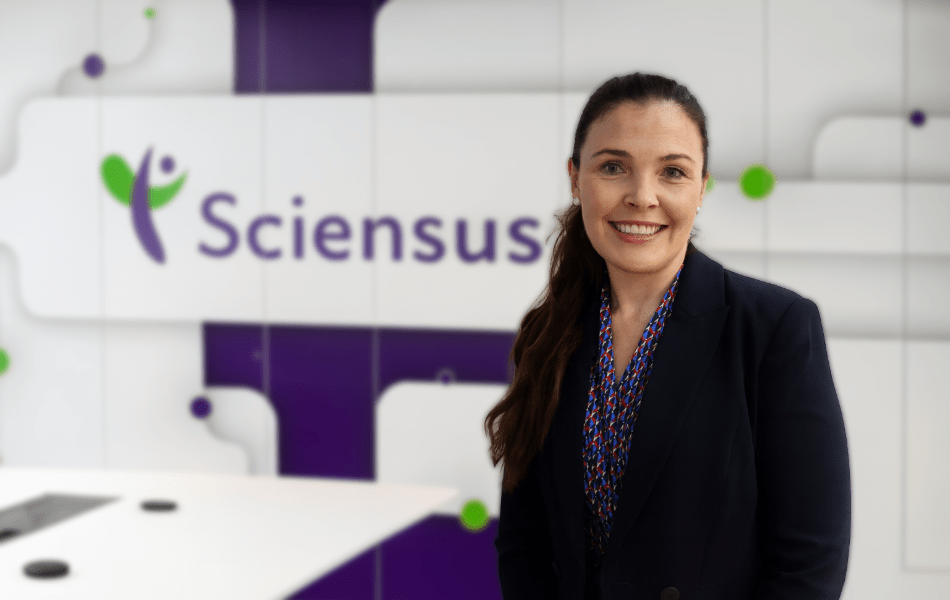
“Progress in rare disease happens through connection, collaboration and community. And perhaps most importantly let’s make sure we first talk to the patient.”
Julie Gosper Managing Director, Rare & Specialty
Care beyond the hospital walls
Survey findings shared during the session revealed that while many patients collect their medicines within an hour, a significant minority spend far longer, creating repeated logistical strain. Home delivery stood out as one of the clearest unmet opportunities, with over half of respondents either lacking access or unaware it exists
Helen Adshead, Practice Development Nurse at Sciensus, described the reality of delivering care at home:
“For many people living with a rare disease, the home becomes the new clinical environment. And importantly safety doesn’t depend on the building; it depends on how we work within it.”
Home care reduces travel burden, lowers exposure risk and improves adherence. But more than that, as Helen explained:
“Home care isn’t just about treatment; it’s about restoring normality for our patients and families.”
When asked what advice he would give to industry, Jibreel’s response was direct:
“Talk to the patients straight away.”
Patient advocacy organisations are critical in making that happen. As Mark noted:
“Great advocacy groups lead with evidence-based research. They lead with data informed advocacy.”
When patient perspectives are integrated early – in protocol design, evidence generation and service delivery – development is not only faster, it is more meaningful and more relevant to the people it is intended to serve.
From awareness to acceleration
In her closing remarks, Julie Gosper summarised the day with clarity:
“Progress in rare disease happens through connection, collaboration and community. And perhaps most importantly let’s make sure we first talk to the patient.”
Rare Disease Day is a moment of visibility. But real progress happens in the everyday work that follows.
- Reducing logistical burden
- Expanding access to home delivery
- Strengthening coordination across care teams
- Embedding patient voices in development
- Supporting mental health alongside disease treatment
These are not side initiatives. They are central to delivering equitable rare disease care.
Want to learn more?
As we move forward in 2026, the message is clear: innovation must be matched by integration. Science must be paired with lived experience. And connection must across all stakeholders remain at the heart of everything we do.
For more expert tips, regional insights and practical strategies from our experts in European rare disease launches, download our new Rare Disease Launch Insights Report.